 Zeta
Zeta has shifted from cross-chain infrastructure toward private AI through Anuma
Zeta is the ZetaChain ecosystem behind Anuma, an AI app that combines model access with encrypted, portable memory. The project originally focused on applications that moved assets and data between blockchains. In June 2026, it announced a focus on private AI and the retirement of cross-chain interoperability features. Anuma provides shared context across models, response comparison, and creation tools. ZETA pays network fees and supports staking-based AI credits. A September vote approved the direction of a move to Solana, with implementation requiring a separate proposal. Private AI access uses spendable credits, while the wind-down schedule set a June 30, 2026, cutoff followed by an indefinite pause on ZRC-20 withdrawals.
Updated on
Anuma puts the AI focus into a usable product
Anuma is available on the web, iOS, and Android, combining AI conversations and creation tools with memory that carries across the account's devices. Its interface brings together models from several providers. Users can write, generate media, and work with files while retaining conversation context within a single interface. Available models and usage allowances depend on the subscription plan. Each Anuma account has a self-custodial wallet, with a derived key that supports its encrypted memory identity. The wallet provides a connection between the consumer app and ZetaChain's infrastructure, even when someone enters through familiar account-based sign-in. Creating that identity and purchasing ZETA are separate activities.
The blockchain and asset standards have distinct roles
ZetaChain and its native token
ZetaChain is a Layer 1 blockchain built with Cosmos SDK and CometBFT, supporting the Ethereum Virtual Machine (EVM) for smart-contract execution. ZETA is ZetaChain's native gas and staking token. Validators secure the network through delegated proof of stake, while holders can delegate tokens to them.
Universal Apps and ZRC-20 assets
The earlier cross-chain architecture used Universal Apps to coordinate contract logic across connected blockchains. Gateway provided interfaces for asset deposits, withdrawals, and contract calls, while ZRC-20 tokens represented supported external assets within ZetaChain's EVM. Their backing assets remained in protocol-managed custody on the originating chain. This representation gave contracts access to external value while retaining a mechanism for withdrawal into the corresponding native asset.
Shared memory and Council Mode serve different tasks
Switching models retains conversation context; Council Mode gathers different responses to the same prompt.
Memory carries context between conversations
Saved preferences and relevant facts can inform later chats across the models that Anuma provides. Users can inspect, edit, export, or delete those memories. Memory Import accepts conversation exports from ChatGPT, Claude, and Grok. Imported discussions can supply saved context, giving the account useful history before a new conversation starts. Memory-topic selection can narrow the stored context that a chat draws upon.
Council Mode compares a shared prompt
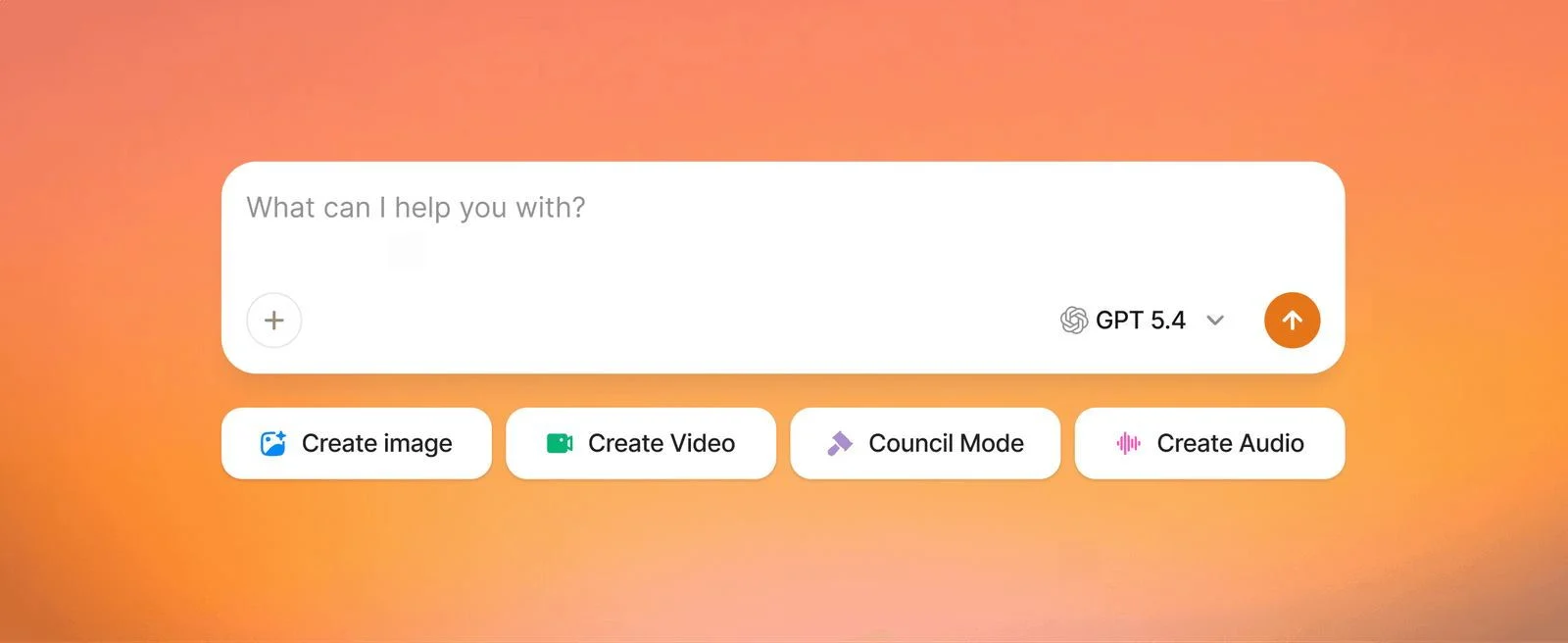
Council Mode runs two to four models on the same prompt and relevant memory context, including shared attached files. An automatic Summary and Analysis synthesizes their responses and describes agreement, reasoning, and uncertainty. These are model-generated assessments. Keeping a single selected response returns the session to a regular conversation with that model.
Subscriptions and ZETA staking provide different access routes
Anuma offers free access and paid subscriptions, so ordinary AI use does not require buying ZETA. Starter's monthly subscription is listed at $9.99 with 1,000 credits; Pro is $19.99 with 2,500 credits. Credits measure usage inside the app, with consumption varying across models and generation tasks. Council Mode charges for each responding model, with additional usage for its synthesis passes.
The web-only Token Dashboard links an Anuma account to ZETA staked on ZetaChain through a bound external wallet. AI credits accrue while those tokens remain staked. Network staking rewards are separate from those credits. Pro eligibility depends on the program's staked-balance threshold, and reward rates can change. A subscription purchases an allowance; staking-based access also involves an on-chain token position and its withdrawal conditions. The wider AI design includes proposed x402 settlement for memory access and agent calls. The June roadmap classified those payment rails as exploratory. That payment design has a different scope from the available credit-based access program.
Encryption and model choice protect different parts of a conversation
Encryption protects stored memory. Model privacy determines which infrastructure processes a prompt and the context that accompanies it.
Local storage and encrypted backup
Anuma encrypts conversations and memories on the device using AES-GCM before uploading backup data, with keys derived from the account's secure identity. Encrypted sync supports access across devices, and backup settings control the stored copies. Readable memory exports make content usable outside the app, while encrypted backups preserve protected copies for restoration.
Private infrastructure and external providers
Open-weight models run on Anuma's private infrastructure, while closed-source models process request context through their external providers. Those providers do not receive permanent access to the full memory vault, although their own policies may permit logging transmitted data. Choosing a commercial model therefore involves a different processing boundary from using the open-source-only Model privacy setting.
Redaction and deliberate sharing
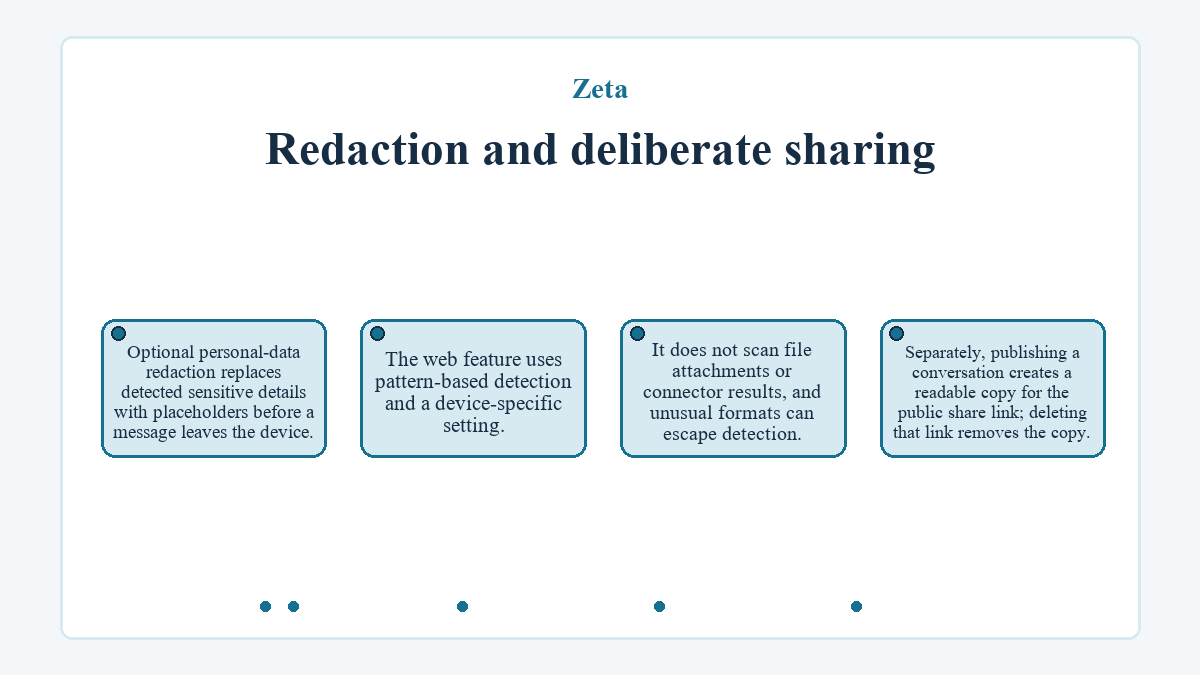
Optional personal-data redaction replaces detected sensitive details with placeholders before a message leaves the device. The web feature uses pattern-based detection and a device-specific setting. It does not scan file attachments or connector results, and unusual formats can escape detection. Separately, publishing a conversation creates a readable copy for the public share link; deleting that link removes the copy.
AI tools extend the platform beyond chat
Anuma includes image, audio, video, and slide-deck creation, along with tools for generating interactive mini-apps. Connected services can provide additional context through individually controlled permissions. Anuma's Housing Agent uses relevant memories to help review leases and assess local rents. For developers, the Anuma software development kit (SDK) combines model access and persistent memory with streaming, tools, agents, and conversation management.
The September 23, 2026, Polymarket integration supplied live market data and links for trading. Direct execution from Anuma chat was exploratory. Nearby launched in New York City on September 29 for opt-in social discovery. It uses permitted context to suggest people nearby, while conversations and private memories stay hidden from other users. Other cities had a waitlist at launch.
Cross-chain retirement changes the earlier asset use cases
On June 1, 2026, ZetaChain announced the retirement of its cross-chain interoperability features. The named integrations included Bitcoin, Solana, Arbitrum, Base, BNB Smart Chain, Polygon, Avalanche, Sui, and TON. The wind-down schedule called for deposits to stop on June 1, 2026, and set a final withdrawal deadline of June 30, 2026, at 11:59 PM PST. It scheduled an indefinite pause on all ZRC-20 withdrawals and an end to cross-chain observation, also including Ethereum.
A ZRC-20 balance represents an external asset covered by the scheduled withdrawal suspension. Native ZETA has a separate role in the proposed network migration. The earlier Solana connection let Universal Apps interact across blockchains; the later proposal concerned moving ZETA and the AI application layer onto Solana. Retiring a connection and changing the token's home network are different events.
The Solana vote set a direction with separate implementation conditions
ZETA holders approved the Solana proposal on September 20, 2026. The proposed conversion is one-to-one into a native Solana Program Library (SPL) token, with the ticker, total supply, and vesting schedules preserved. A second proposal must define the snapshot, balance-transfer mechanism, and schedule. Exchange conversions depend on each exchange confirming participation. Approval of the direction does not itself move a holder's balance.
The design provides for ZetaChain's Layer 1 to wind down after holders move, with validators and staking operating until that transition. The future staking arrangement and reward transition on Solana remained under exploration in the September proposal.
AI access and token holdings use separate conditions
Anuma's credit allowance, the infrastructure processing a prompt, and the network holding an existing token balance involve separate choices.
- Free or paid subscription access can provide AI usage without a ZETA stake.
- Staking-based credits require an eligible token position that remains staked.
- The open-source-only Model privacy setting routes model processing to Anuma's private infrastructure.
- The wind-down schedule set a June 30, 2026, cutoff and an indefinite pause on ZRC-20 withdrawals.
- Native ZETA migration needs the approved snapshot and conversion mechanism specified in the implementation proposal.
A native SPL replacement would keep operating on Solana once the old Layer 1 retires. A bridged wrapped token would need backing that remains available on the original chain.
Frequently asked questions about Zeta
-
Does Anuma keep imported conversations synchronized with their original app?
- Anuma imports a conversation export without establishing continuous synchronization with the original service. Later conversations there require another export and import. Imported history appears inside Anuma, with extracted memories available for context across supported models. Anuma's encrypted cross-device sync applies to data already brought into the account.
-
Can I still access saved Anuma data after my credits run out?
- Existing chats, memory, and saved files remain accessible after the AI credit balance runs out. Sending new messages or generating content requires additional credits. Monthly plan credits do not roll over. Paid-plan credits reset at the next billing cycle; Free credits refresh monthly. An upgrade or an eligible credit pack can add usage; pack availability differs between subscription plans and web or mobile purchases.
-
Will a Temporary chat add information to my stored memory?
- Temporary chat was designed to bypass memory extraction and the Memory Vault. Anuma's release notes for the week of August 17, 2026, report its removal from the web app, where every chat now saves. Marking saved memories private has a different effect: they remain stored and available for relevant recall, while public visibility stays restricted. The privacy eye controls whether newly saved memories are Private or Public. It does not stop memory creation or limit the model families that can use relevant context.
-
What happens to ZETA held on Ethereum under the Solana proposal?
- ZETA represented as an ERC-20 token on Ethereum was excluded from the September Solana migration proposal. The planned native SPL replacement targeted ZETA on ZetaChain's own Layer 1. Ethereum token balances would remain on Ethereum under that proposal, and exchange conversions would depend on confirmed platform arrangements.
-
Why can a confirmed ZETA transfer remain missing from an exchange account?
- A successful on-chain transfer establishes delivery to an address, while exchange crediting also depends on support for that asset and network. The receiving platform may require further confirmations or may not support the deposit route used. Use the transaction hash on the correct network's explorer to check the recipient, asset, and transfer status. Recovery options depend on the platform and route; confirmation does not make an unsupported deposit reversible.